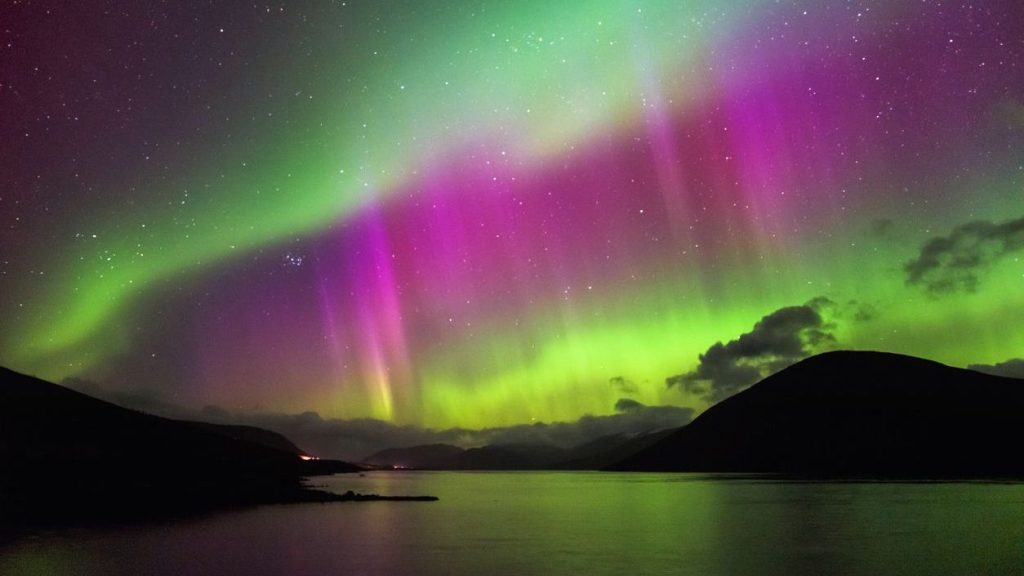
Few sights pull people out into the cold quite like the aurora. Catching the Northern Lights in Scotland takes a bit of luck and a bit of planning, but it’s far more achievable than most folk assume. You don’t need to fly to Tromsø. On the right night, with a clear northern horizon and properly dark skies, the aurora shows up across much of the country.
Scotland sits at a high enough latitude that strong solar activity reaches it regularly. The last couple of winters made the point, with displays photographed everywhere from Shetland down to the Borders. This guide covers where to look, when to go, how to read a forecast, and how to come away with a photo worth keeping.
Best Places to See the Aurora Borealis in Scotland
The further north and the darker the sky, the better your odds. The Highlands and Islands lead the way for Scotland Northern Lights sightings.
Shetland and Orkney sit closest to the Arctic and pick up the aurora most often, helped by very low light pollution and open sea horizons. The Isle of Skye, with several Dark Sky Discovery Sites and headlands facing north over the water, is another strong bet. Inland, the Cairngorms hold some of the darkest skies on the UK mainland within reach of a car.
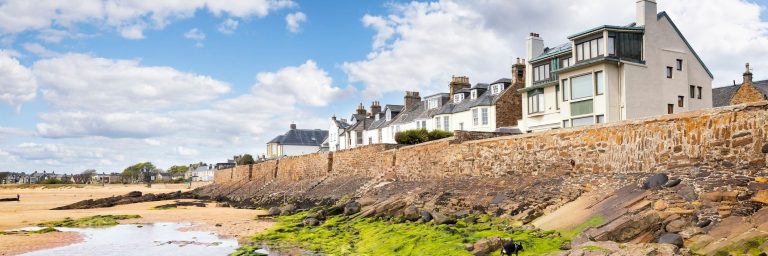
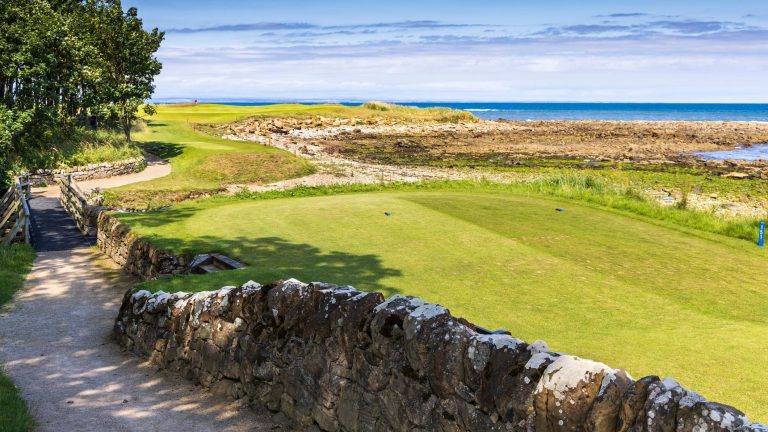
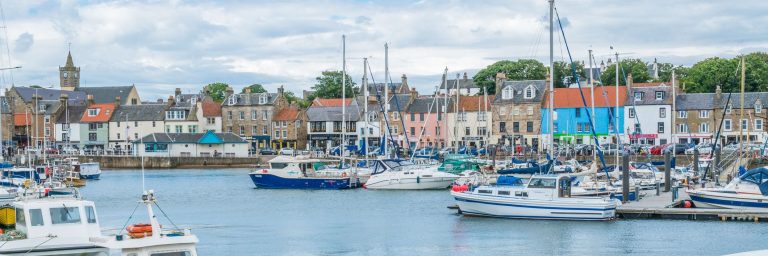
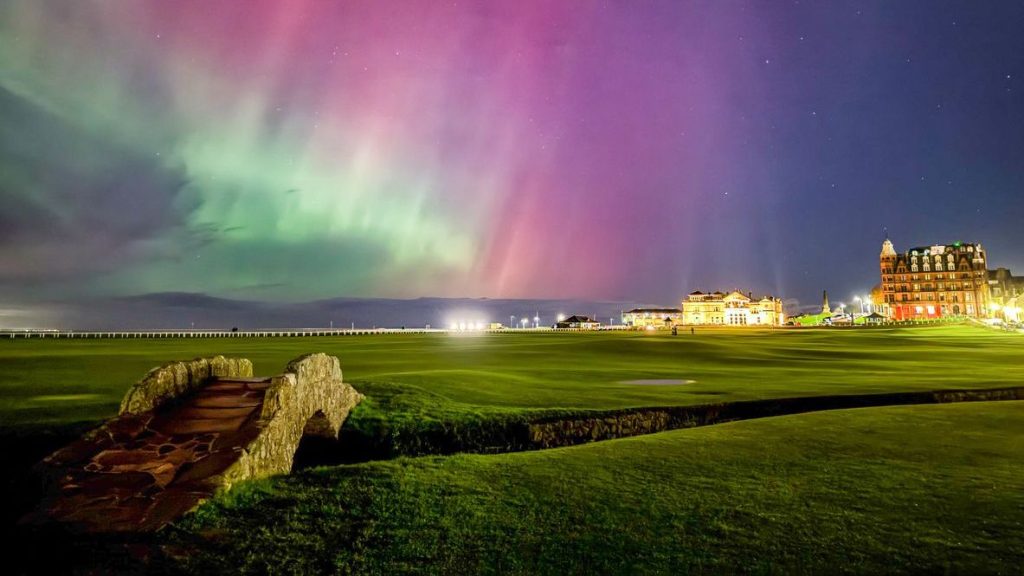
The far north isn’t your only option, though. Here in Fife, the East Neuk coast gives you exactly what an aurora hunter wants: dark skies and a clear view out over the sea to the north. The stretch from Elie out to Lady’s Tower is a solid spot on a strong night, and the quiet shoreline around Crail works well too. Sightings this far south aren’t guaranteed, but when a big geomagnetic storm hits, the East Neuk puts on a real show.
Best Time to See the Aurora in Scotland
The aurora season runs from roughly September to late March. That window matters because Scotland needs proper darkness, and from late spring through midsummer the nights never get properly dark this far north. Around midsummer there’s no true darkness at all, so the aurora is off the menu until autumn comes back round.
Within the season, the equinoxes around late September and late March tend to bring the most activity, thanks to the way the solar wind lines up with Earth’s magnetic field. Aim for the hours either side of midnight, somewhere between about 10pm and 2am, and pick a night near the new moon when there is no moonlight washing out the sky.
One note on the bigger picture. The solar cycle peaked in late 2024, so we’re now past its most active stretch. That doesn’t mean the show’s over. The years just after a solar peak still throw out powerful storms, so there’s plenty left to see through this season and the next.
How to Read the Northern Lights Forecast in Scotland
Knowing how to read a Northern Lights forecast in Scotland is what separates a wasted late night from a good one. The key number is the Kp index, a scale from 0 to 9 that measures geomagnetic activity. For Fife and central Scotland you generally want Kp 5 or higher, while the far north can show colour at lower readings.
The most useful tool for the UK is AuroraWatch UK, run by Lancaster University, which issues alerts based on magnetic readings taken in Britain rather than generic global data. Phone apps such as My Aurora Forecast and the Glendale App are handy for live Kp readings and short-notice alerts.
Two things no forecast controls: cloud and timing. Check the cloud cover before you commit to a spot, and be ready to move at short notice, because the strongest bursts can come and go inside an hour.
How to Photograph the Aurora in Scotland
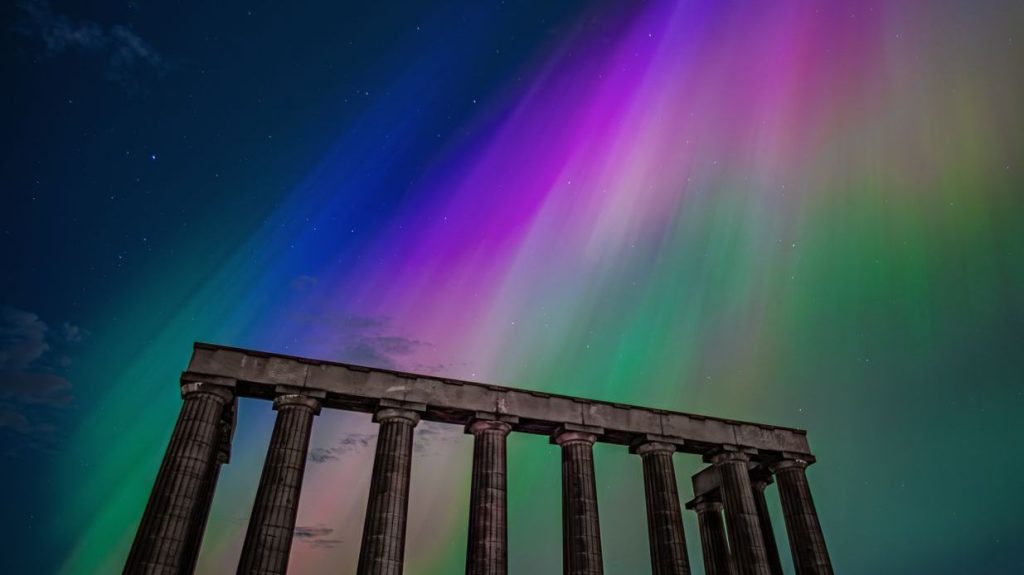
The aurora often shows more colour through a camera than it does to the naked eye, so even a faint glow is worth shooting. You don’t need professional kit, but a few basics make all the difference.
A tripod is the one thing you cannot skip, since aurora shots need long exposures and any handheld wobble ruins them. Set your camera to manual so you can control the settings yourself. A wide-angle lens helps you take in more of the sky, and a remote release or the camera’s timer stops you nudging the frame as you press the shutter.
For settings, start with a high ISO of around 1600 to 3200 and a wide aperture, then try an exposure of 10 to 20 seconds and adjust from there. A modern phone on night mode does a surprisingly good job too, propped on something steady. Bring a torch with a red filter to protect your night vision, and dress far warmer than you think you need to. A Scottish coast in January is no joke.
Where to Stay for the Northern Lights in Scotland
Seeing the Northern Lights in Scotland is part planning and part patience, but it’s well within reach if you give yourself dark skies and a clear northern horizon during a season with long nights. Keep an eye on the forecast and wrap up properly, then step outside the moment the alert pings.
If you’d rather not chase the aurora hundreds of miles north, our own lodges at Stewarts Resort make a comfortable base with dark skies on the doorstep. Four miles from St Andrews out by Cameron Reservoir, the five-star park sits well away from the town’s glow, and many of the lodges come with a hot tub and private decking, so you can watch for the lights with a drink in hand and warm up the moment the cold bites.
Premier Stays Fife looks after a hand-picked set of homes and lodges across St Andrews and the East Neuk, with local support and hotel-level housekeeping behind every stay. Browse the Premier Stays Fife collection and pick your spot for the next clear night.